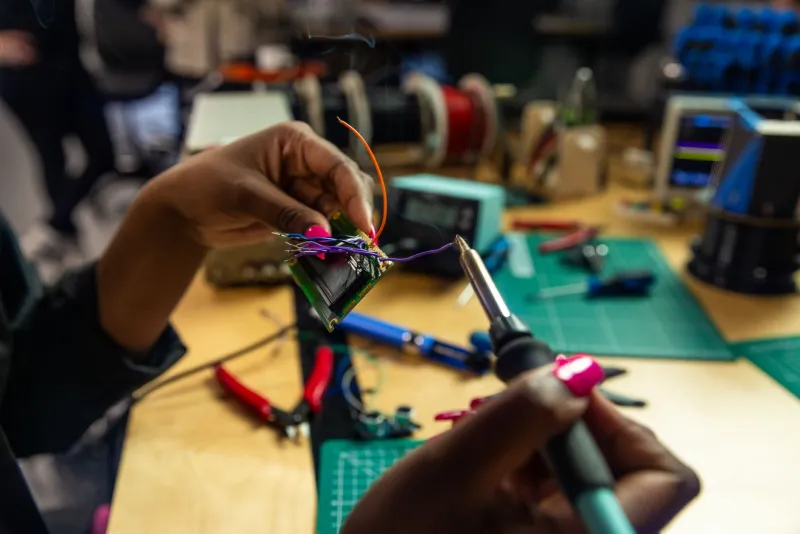
Beyond the Big Box: A Maker's Field Guide to Sourcing Parts You Can't Find at the Hardware Store
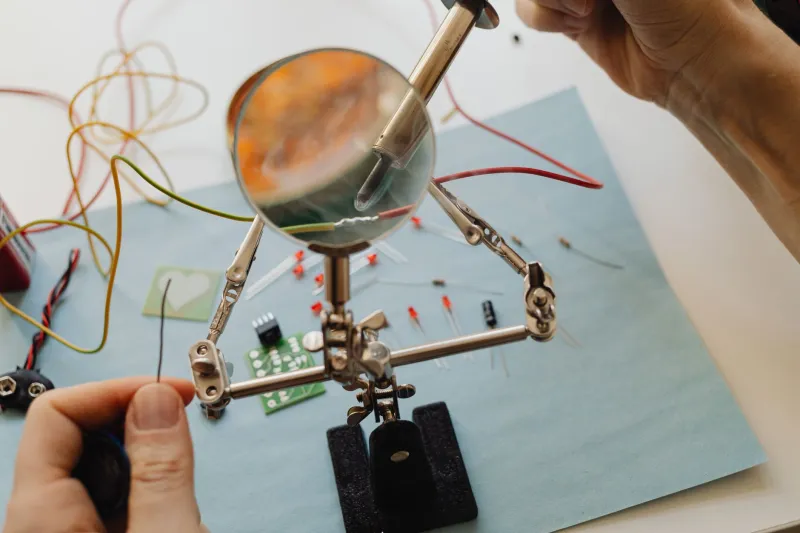
Every maker knows that moment. You've got the vision, you've sketched the plans, maybe you've even started prototyping — and then you hit a wall. The local hardware store has plenty of deck screws and garden hose fittings, but it has absolutely zero 5mm linear bearings, no 18-gauge nichrome wire, and definitely not the specific MOSFET you need for your motor controller. Welcome to the supply chain problem that almost every serious maker eventually runs into.
The good news? The ecosystem of specialty suppliers has exploded over the last decade, and knowing where to look — and how to build relationships with the right vendors — can completely change how you work. Here's a breakdown of the landscape, from the big names to the hidden local gems.
The Household Names: Where Most Makers Start
If you haven't bookmarked McMaster-Carr yet, stop reading and do it now. This industrial supply giant carries over 600,000 products, from exotic alloy fasteners to custom gasket material, and their website is genuinely one of the best-designed parts catalogs on the internet. Dimensions, tolerances, material specs — it's all there. Shipping is fast, prices are fair, and the sheer breadth of inventory makes it a first stop for mechanical builds of any complexity.
For electronics, Adafruit and SparkFun are the community darlings for good reason. Both companies were built specifically around the maker movement, and their product pages read more like tutorials than sales listings. You're not just buying a sensor — you're getting hookup guides, example code, and forum support. Digi-Key and Mouser are the heavier-duty options when you need components in quantity or you're sourcing parts that are a little more obscure. They stock millions of SKUs and cater to both hobbyists and professional engineers.
For raw materials — sheet metal, acrylic, wood stock, foam — Online Metals and SendCutSend have become go-to resources. SendCutSend in particular has been a game-changer for makers who need laser-cut or waterjet-cut parts without access to a full shop. Upload a DXF, choose your material, and get precision-cut pieces shipped to your door.
The Emerging Marketplaces Worth Watching
Beyond the established players, a newer wave of platforms has started filling gaps that the big distributors don't address well.
Tindie is essentially an Etsy for hardware — a marketplace where independent makers and small electronics companies sell specialty modules, breakout boards, and custom components you genuinely can't find anywhere else. It's a great place to discover niche solutions and support small creators in the process.
eBay still deserves a mention, especially for vintage components, surplus electronics, and one-off industrial finds. Experienced makers know that eBay's industrial and scientific category is a goldmine for stepper motors, linear actuators, and precision hardware at fractions of retail cost. You just have to be comfortable with variability in condition and lead times.
For 3D printing materials and filament specifically, MatterHackers has carved out a strong niche, with a huge selection of specialty filaments and resin products that the big-box craft stores simply don't carry.
Your Local Supply Chain: More Powerful Than You Think
Here's something the internet doesn't always tell you: some of the best sourcing happens close to home, and it often involves a conversation rather than a checkout cart.
Local metal shops and fabrication houses are worth getting to know personally. Many of them generate offcut scrap that they're happy to sell cheaply or even give away to makers who ask nicely. A 12-inch piece of 1/4-inch aluminum plate that would cost you $40 online might be sitting in a scrap bin for a couple bucks. Call ahead, introduce yourself, explain what you're building. Fabricators tend to respect people who actually make things.
Plastics distributors operate similarly. Companies like TAP Plastics (West Coast) or local regional distributors often have drop bins full of acrylic, polycarbonate, and HDPE offcuts. These are perfect for prototyping.
Salvage yards and electronics recyclers are underrated treasure troves. Old appliances, discarded industrial equipment, and obsolete electronics all contain motors, gears, wiring, switches, and hardware that makers repurpose constantly. It takes patience and a willingness to get your hands dirty, but the finds can be remarkable.
Negotiating Bulk Pricing: It's Not as Awkward as You Think
If you're building for a maker fair showcase, producing a small run of a product, or collaborating on a group project, buying in bulk almost always makes sense — and most suppliers are open to negotiating if you approach it right.
Start by being transparent about your volume and timeline. Suppliers respond well to clarity. Saying "I need 200 units of this part over the next six weeks" is a lot more compelling than a vague inquiry. Ask directly about quantity price breaks — most distributors have tiered pricing that isn't always visible on the standard product page.
For smaller specialty vendors, consider offering something in return: a mention in your project documentation, a write-up on your blog, or a shoutout at your maker fair booth. Smaller suppliers genuinely value community visibility, and that kind of partnership can turn a one-time transaction into an ongoing relationship.
Building a Supplier Rolodex That Works for You
The makers who source most efficiently aren't necessarily the ones with the biggest budgets — they're the ones with the best relationships. Keep a running document of every supplier you've worked with: what they carry, how their lead times run, who you spoke with, and any special arrangements you've made. That list becomes one of your most valuable project assets over time.
Join local maker spaces, attend regional maker fairs, and pay attention when other builders mention where they sourced something unusual. That kind of word-of-mouth intel travels fast in maker communities, and it's often more valuable than any Google search.
At the end of the day, sourcing is a skill just like soldering or woodworking — it gets better with practice, and it pays off in every build you do. The right part, at the right price, from a supplier you trust? That's not just logistics. That's the foundation of a great project.