Did You Actually Make That? AI Is Rewriting the Rules of the Build Table
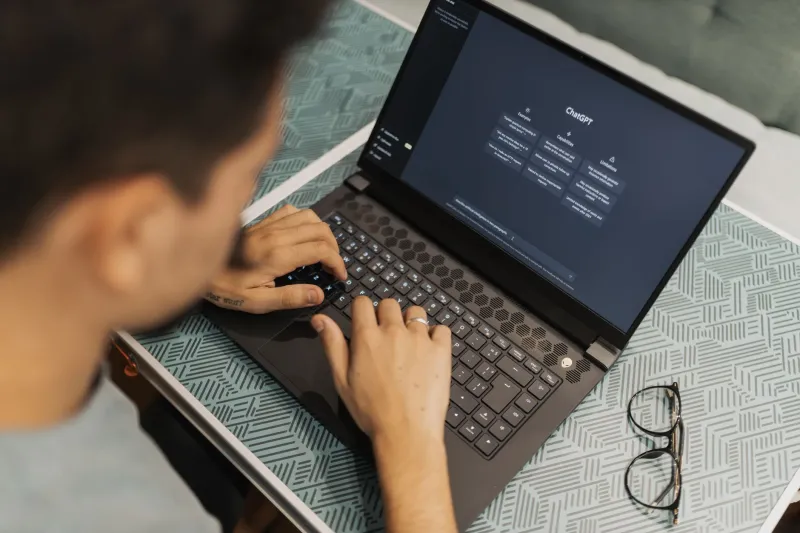
Somewhere in a makerspace right now, someone is typing a prompt into ChatGPT and getting back a block of Arduino code that would have taken them three hours to write themselves. Somewhere else, a product designer is running a generative design algorithm that's producing a bracket geometry no human engineer would have ever drawn by hand—lighter, stronger, and structurally weird in ways that are somehow perfect. And somewhere else still, a long-time maker is watching all of this happen and feeling something that doesn't have a clean name yet. Not quite anger. Not quite jealousy. Something closer to grief.
AI tools have arrived in the maker world, and the community is having a genuinely interesting argument about what that means. Not the fake kind of argument where everyone secretly agrees. The real kind, where smart people with good intentions are landing in very different places.
The Case for Embracing the Acceleration
Let's start with the enthusiasm, because it's real and it deserves to be taken seriously.
For makers who are strong on ideas but weak on specific technical skills—say, someone with a brilliant product concept but limited coding background—AI assistance can be genuinely transformative. Tools like GitHub Copilot or even a well-prompted ChatGPT session can get a beginner from "I have no idea how to start" to "I have working code I can actually learn from" in under an hour. That's not nothing. That's the difference between giving up and shipping something.
Generative design tools in CAD software like Fusion 360 are doing something similar for physical prototyping. Feed in your constraints—weight limits, stress points, material—and the algorithm explores a solution space that would take a human weeks to manually iterate through. The results are often genuinely novel. And critically, they can be manufactured. This isn't science fiction. People are printing these parts right now.
Jamila Torres, a product designer and regular at maker fairs in the Pacific Northwest, has fully integrated AI into her workflow and doesn't apologize for it. "I use AI the same way I use a calculator," she says. "I still understand the math. I still make the creative decisions. The tool just handles the computation so I can focus on the problem."
That analogy—AI as calculator—is doing a lot of work in these conversations. Whether it holds up is exactly what's being debated.
The Case for Slowing Down
Here's where the grief starts to make more sense.
Learning to code by actually writing code—struggling with syntax, debugging by hand, understanding why something doesn't work—builds a kind of knowledge that's qualitatively different from reading code that an AI generated. The same is true for CAD, for circuit design, for almost any technical skill. The frustration is the curriculum. When AI removes the frustration, it might also be removing the learning.
This isn't a new concern. People said similar things about calculators in math class, about spell-check in writing, about AutoCAD replacing hand drafting. And those concerns weren't entirely wrong. There are real skills that got lost. The question is whether what got gained outweighed what got lost—and whether we had a choice anyway.
Raj Patel, who teaches electronics workshops at a community makerspace in Chicago, is genuinely conflicted. "I've seen students use AI to debug their code, and it works, and they move on," he says. "But I've also seen students use AI to debug their code and not understand why it works, and then hit a wall six months later that they can't get past because they skipped the foundation. Both things are happening."
The honest answer is that AI assistance, like most tools, depends enormously on how it's used. Used well, it's a scaffold that accelerates genuine learning. Used carelessly, it's a shortcut that creates fragile knowledge. The tool itself doesn't determine which one happens. The maker does.
The Authenticity Question
Then there's the identity piece, which is the most charged and the least comfortable to discuss directly.
If you bring an AI-designed, AI-coded, AI-optimized project to a maker fair, did you make it? Most people's gut reaction is "sort of" or "it depends." But on what does it depend? On how much of the prompt you wrote? On whether you modified the output? On whether you understand what the AI produced?
These aren't rhetorical questions. Maker communities are actively working through them right now, and the answers matter for things like fair judging categories, grant applications that require original work, and the basic social contract of a community built around the idea that you built the thing you're showing.
One useful frame: authorship versus craftsmanship. A filmmaker who directs a movie made it, even though they didn't personally operate the camera, compose the score, or edit every frame. A chef who designed a dish made it, even if a sous chef executed the prep. What makes them the author is the vision, the decisions, the intention. AI-assisted making might fit within that frame for some kinds of work—and might genuinely not for others.
What Maker Fairs Should Do With This
Practically speaking, maker fairs and community spaces are going to need to develop some kind of position on AI-assisted work, because the current answer of "we'll figure it out later" is already becoming untenable.
A few directions worth considering:
Transparency, not prohibition. Rather than trying to police AI use—which is both impossible and counterproductive—require makers to disclose how AI tools were used in their project. This normalizes the conversation and gives audiences useful context without turning the fair into an authenticity tribunal.
New categories, not just new rules. Create explicit categories for AI-assisted or human-AI collaborative projects. This stops makers from hiding their tools and starts celebrating a genuinely new kind of making.
Skill-building that accounts for AI. Workshops should teach people to use AI tools thoughtfully, not just to avoid them. That includes understanding their outputs, recognizing their errors, and knowing when a human hand is irreplaceable.
The Build Table Is Getting Bigger
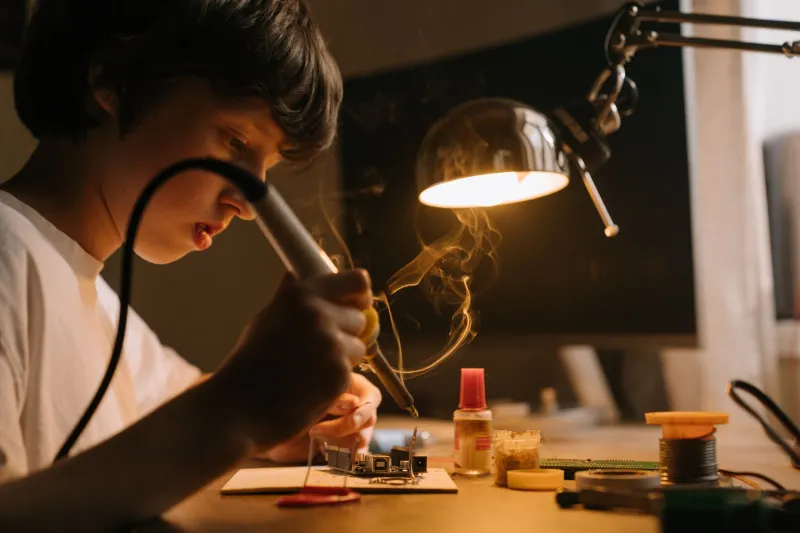
Here's the thing about tools: they change what's possible, which changes who can participate, which changes the community. That's been true from the first soldering iron to the first desktop 3D printer. AI is another step in that direction, bigger and faster than most.
The maker movement was built on the idea that more people should be able to build more things. If AI genuinely expands that—if it brings in people who were blocked by technical barriers and lets them contribute ideas and creativity to the maker world—that's worth something real.
The grief is real too. Something is changing about what it means to make something with your hands, your brain, your hard-won knowledge. That's worth acknowledging honestly, not dismissing.
Both things can be true. The build table is getting bigger, and that's complicated, and it's also kind of exciting. That's probably the most honest thing anyone can say about it right now.