Your Design, Their Profit: Inside the Knockoff Problem Rattling Maker Fairs
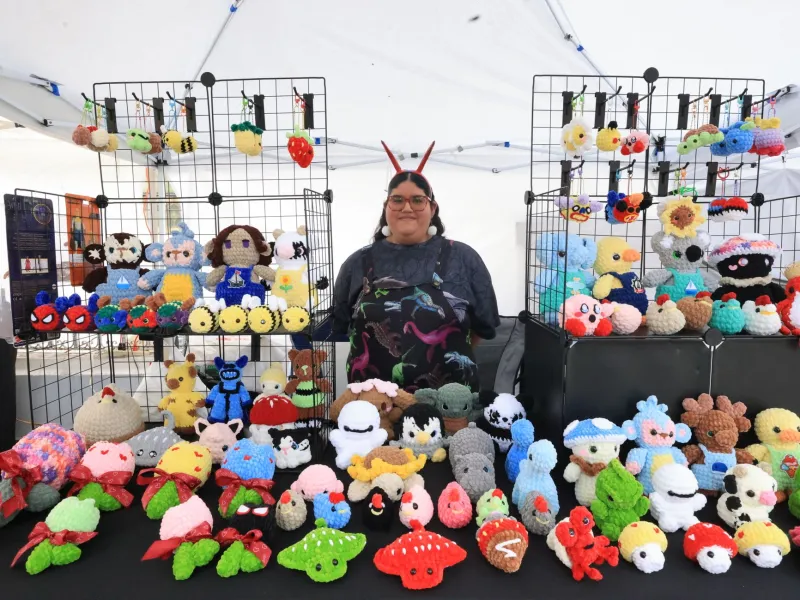
The Booth Next to Yours Might Be Watching
It usually starts the same way. A maker spends months—sometimes years—developing something genuinely original. A custom circuit board. A hand-tooled leather accessory with a clever mechanical feature. A modular planter system built from reclaimed materials. They bring it to a fair, set up their booth, and feel that particular electric pride of showing off something they made with their own hands.
Then, within weeks, an almost-identical version appears online. Mass produced. Sold at a price no solo maker could ever match. Reviews rolling in from buyers who have no idea there's a human being somewhere who dreamed this thing up first.
This isn't a hypothetical. It's a pattern that's becoming increasingly common across maker fairs nationwide—and it's creating a tension that cuts right to the heart of what maker culture is supposed to be about.
Open Source vs. Open Season
Here's the uncomfortable truth that makes this problem so hard to solve: maker culture was built on openness. Sharing files, posting build guides, releasing designs under Creative Commons licenses—these aren't bugs in the system. They're features. The whole ethos is rooted in the idea that knowledge shared is knowledge multiplied.
But that same openness creates a vulnerability. When you post your design files to a public repository or walk someone through your process at a fair booth, you're also handing a potential fast-follower a head start. And in the age of overseas manufacturing platforms that can prototype and mass-produce a product in weeks, the gap between "inspiration" and "rip-off" has never been shorter.
The reseller problem isn't just about lost revenue, though that's real and significant for makers who depend on sales to fund their work. It's also about credit. When a knockoff floods the market, the original creator often becomes invisible. Buyers don't know the difference. The story behind the design—the failed prototypes, the late nights, the specific problem the maker was trying to solve—gets erased.
How Fairs Are Responding
Organizers across the country are grappling with how to address this without becoming the gatekeepers nobody wants them to be.
Some fairs have introduced vetting processes that require applicants to demonstrate original work—build logs, prototype photos, documented development timelines. Others have added explicit clauses to vendor agreements prohibiting resellers from presenting manufactured goods as handmade originals. A few have created "maker verified" badging systems to help attendees distinguish genuine creators from curated resellers.
Marcos Delgado, who organizes a regional maker fair in the Southwest, described the shift in his application review process: "We started asking for process documentation a couple years ago. Not because we want to police people, but because attendees were starting to feel burned. They'd come expecting to meet makers and end up buying something that could have shipped from a warehouse."
The challenge is enforcement. Most fairs run on volunteer labor and lean budgets. Deep-dive vetting for every applicant isn't always realistic. And the line between "maker who uses a manufacturer to scale up" and "reseller pretending to be a maker" isn't always obvious.
The Platform Problem
Beyond the fairs themselves, platforms that host maker project files—Thingiverse, Printables, GitHub, and others—are increasingly being used as sourcing tools by commercial operators looking for ready-made designs to manufacture at scale.
Some platforms have responded by refining their licensing frameworks and adding clearer attribution tools. Others have introduced commercial use restrictions that creators can apply to their uploads. But enforcement remains patchy, and the global nature of manufacturing makes legal remedies impractical for most individual makers.
The Creative Commons community has been wrestling with similar questions for years. The core tension hasn't changed: the more you protect, the less you share. The more you share, the less you control.
What Makers Themselves Are Doing
Some creators have responded by leaning into transparency as a competitive advantage. They document everything—design decisions, material choices, iteration history—in ways that mass producers simply can't replicate. The story becomes the product. The relationship between maker and buyer becomes the differentiator.
Others have organized informal networks to flag knockoffs when they appear, alerting each other through community channels and helping amplify original creators when their work gets copied.
There's also a growing conversation about whether maker fairs themselves should be doing more to actively market the value of buying direct from creators. Not just as an ethical choice, but as a better consumer experience—one where you can ask the person who built the thing exactly how they built it, and walk away with something that has a genuine human story attached to it.
None of these approaches fully solve the problem. But they point toward something important: the maker community's best defense against copycat culture isn't legal firepower or aggressive gatekeeping. It's doubling down on the things that make original makers irreplaceable—the creativity, the conversation, and the connection that no knockoff can manufacture.