Empty Workshops, Full Feeds: The Strange Disappearing Act Happening Inside Maker Culture
The Numbers Don't Add Up—And That's the Point
Here's something that should make your head spin: Google Trends data for searches like "DIY projects" and "how to make" have been climbing steadily for years. Maker fair attendance is up in dozens of cities. Craft and build content dominates YouTube. And yet, if you've been paying attention to the community spaces where makers actually work, you've probably noticed something uncomfortable—a lot of them are gone.
Shops that were humming with CNC machines and soldering irons three years ago now have "for lease" signs in the window. Annual fairs that once took over entire convention centers have quietly scaled back to a few rented rooms in a community center. The footprint is shrinking. The enthusiasm, apparently, is not.
So what's actually going on?
When "Community" Moves Online
The honest answer is complicated, and it starts with a shift that happened fast and hit hard: the pivot to virtual.
During the pandemic, maker communities—like everyone else—moved to Discord servers, YouTube channels, and Reddit threads to stay connected. And something unexpected happened. A lot of people liked it. They could learn at their own pace, ask questions in a forum at 2 a.m., and access tutorials from builders halfway across the country. The friction of driving forty-five minutes to a shared workspace dropped to zero.
Subscription-based workshop kits exploded during this period and never really cooled off. Companies like KiwiCo and Maker Crate found massive audiences by delivering hands-on experiences directly to front doors. You don't need a laser cutter if a kit already has your parts pre-cut. You don't need a mentor standing beside you if there's a step-by-step video waiting on your phone.
For a lot of people—especially beginners—this is genuinely great. Accessibility went up. Barrier to entry dropped. More people got to experience the joy of making something with their hands.
But something got traded away in that deal.
What a Screen Can't Replicate
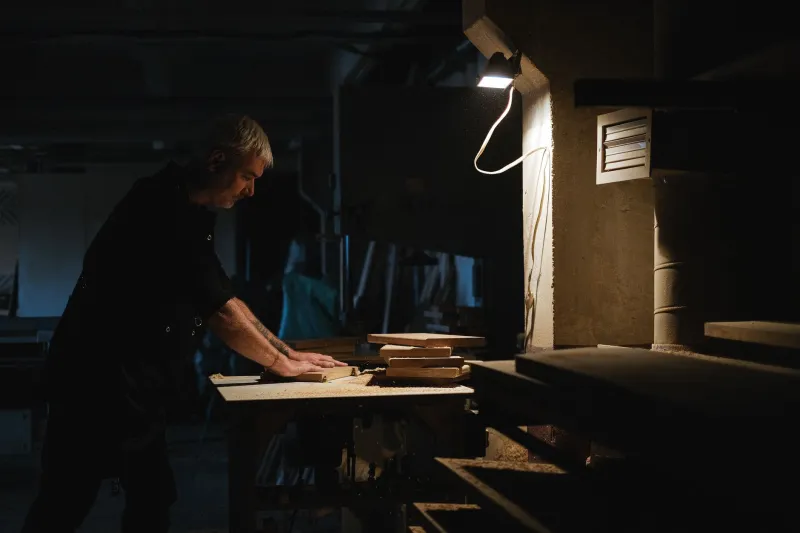
Ask anyone who's spent serious time in a real makerspace about their best memories, and they rarely describe a project they completed alone. They describe the moment a stranger walked by their workbench, glanced at what they were building, and said, "Hey, have you tried doing it this way?"
That collision—the unplanned, unscripted exchange between two people who didn't know they needed to talk to each other—is what researchers and educators sometimes call serendipitous innovation. It's the stuff you can't schedule. It doesn't happen in a Zoom breakout room. It doesn't happen in a Discord thread. It happens when a robotics hobbyist is working three feet away from a textile artist and they both suddenly realize they're solving the same problem from opposite directions.
Physical makerspaces are engines for that kind of accidental genius. When they disappear, that engine goes with them.
Jennifer Okafor, who ran a makerspace in Columbus, Ohio, for six years before closing it last spring, put it plainly: "The members who stayed with us the longest weren't there for the tools. They were there for each other. When the social glue thinned out—when fewer people were coming in regularly—the whole thing started to feel hollow."
The Economics Are Brutal
Let's not romanticize this. Physical spaces are expensive in ways that no amount of community spirit fully offsets.
Rent in most mid-size American cities has climbed sharply. Liability insurance for spaces with power tools and electrical equipment is not cheap. Equipment maintenance—especially for industrial-grade machines that get heavy use from members with wildly varying skill levels—adds up fast. And membership models, which most makerspaces rely on, are notoriously fragile. People sign up with big intentions and drift away after a few months.
Pop-up experiences have filled some of the gap. A weekend maker fair doesn't carry the overhead of a permanent lease. A traveling workshop series can reach ten cities without paying rent in any of them. These formats work—and they're growing—but they're not the same as having a place you can show up to on a Tuesday afternoon and just tinker.
The Hybrid Question
Some spaces are experimenting with hybrid models that blend physical presence with digital community. Members badge in for tool access but stay connected through an app. Monthly in-person meetups are streamed for remote participants. Project documentation lives in a shared online library that anyone—member or not—can access.
It's not a perfect solution, but it might be the most honest one. The future of maker culture probably isn't a choice between the screen and the workbench. It's figuring out how those two things can actually feed each other instead of competing.
What's clear is that the people who care most about hands-on learning—educators, organizers, experienced makers—are watching this shift with real concern. Because you can teach someone to solder through a video. But you can't teach them what it feels like to stand in a room full of people who are all, in their own weird and wonderful ways, trying to build something that didn't exist yesterday.
That feeling is worth fighting for. And right now, the spaces where it lives need a little more attention than the feeds celebrating it.