Hands That Need a Rest: The Burnout Nobody in Maker Culture Wants to Talk About
The Project That Never Ends
There's a version of burnout that's easy to recognize. The person who stops showing up. The fair booth that sits empty where a familiar face used to be. The maker whose social accounts go quiet after years of regular posts.
And then there's the version that's harder to see—the one where someone is still showing up, still building, still posting, but running on fumes. Still chasing the next idea because stopping feels like failure. Still measuring their worth by their output. Still saying yes to every collab, every demo request, every "hey, could you make one of these for me?"
Maker burnout is real, it's widespread, and the culture around building things with your hands has been surprisingly slow to reckon with it.
The Pressure to Always Have a Next Project
Maker culture has a mythology problem. The stories we tell—and the ones that get amplified at fairs, on platforms, in profiles—are almost always stories of momentum. The tinkerer who kept iterating until they cracked it. The garage inventor who didn't give up. The maker who failed twelve times and succeeded on the thirteenth.
These stories are inspiring. They're also, in aggregate, quietly exhausting. Because what they suggest is that pausing, resting, or stepping back is a detour on the road to success rather than a legitimate part of the creative process.
For makers who have built any kind of audience—whether at local fairs or online—the pressure compounds. People expect new things. Algorithms reward consistency. And in a culture that celebrates the build, it can feel deeply uncomfortable to say, "I'm not building anything right now. I'm just resting."
Dana Yuen, a maker based in the Pacific Northwest who spent four years as a regular presence on the regional fair circuit, took a six-month break last year after realizing she hadn't enjoyed a project in over a year. "I was building for the booth, not for myself," she said. "Every project had to be showable, sellable, explainable to a stranger in thirty seconds. I lost the thread of why I started doing this."
The Physical Toll Nobody Posts About
There's also the body to consider—something that gets glossed over in the celebration of maker culture's intensity.
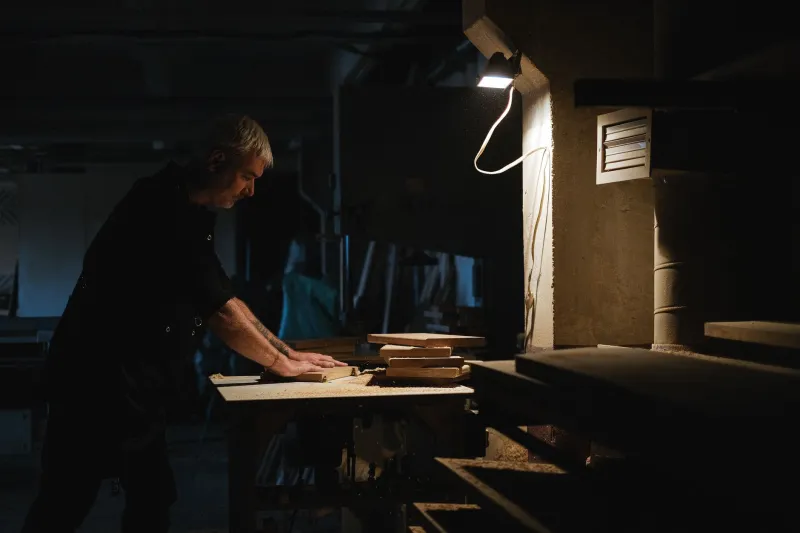
Woodworking, metalworking, electronics assembly, sewing, ceramics—these are physically demanding crafts. Repetitive strain injuries are common. Sawdust and chemical exposure create long-term respiratory concerns when proper ventilation is an afterthought. Workshop accidents, while rarely catastrophic, are a regular occurrence for people working with power tools under time pressure or while fatigued.
The maker who pulls an all-nighter to finish a project before a fair deadline isn't just tired the next morning. They're also working with compromised judgment around tools that don't forgive mistakes.
And yet the culture tends to romanticize exactly this kind of intensity. The "built it in 48 hours" story gets shared. The "I had to take three weeks off because my wrist gave out" story doesn't.
Financial Strain and the Sunk Cost Spiral
For makers who are trying to turn their craft into income—or who have already made the leap to selling at fairs and online—there's another layer of pressure that's rarely discussed openly: the financial reality of failed projects.
Materials cost money. Equipment costs money. Fair booth fees, which have climbed at many events in recent years, cost money. And the projects that don't sell, the prototypes that don't work, the ideas that seemed great and landed with a thud—all of that represents real financial loss, not just creative disappointment.
The maker-to-entrepreneur pipeline that gets celebrated in a lot of coverage—including our own—can obscure how many people are quietly absorbing losses, maxing out materials budgets, and feeling the specific shame of having invested heavily in something that didn't connect.
The sunk cost spiral is vicious in maker culture. When you've spent months and hundreds of dollars on a project, walking away from it feels like admitting defeat. So makers keep pushing, keep refining, keep hoping the next fair will be the one where it clicks—even when every signal is telling them to let it go.
What Healthy Maker Culture Could Look Like
The good news is that conversations about this are starting to happen—in community spaces, on forums, and increasingly at the fairs themselves.
Some organizers have started building programming around creative sustainability—panels on managing the business side of making without burning out, workshops on recognizing when a project isn't working, open conversations about the emotional rollercoaster of creative work.
There's also a small but growing movement among experienced makers to be more publicly honest about their off seasons, their shelved projects, and their creative blocks. When someone with a respected reputation in the community says, "I took three months off and came back better for it," it gives permission to others who are struggling in silence.
The maker community's greatest strength has always been its willingness to share—knowledge, tools, techniques, failures. Extending that openness to include the experience of burnout, rest, and creative recovery might be one of the most important things it can do right now.
Because the best makers aren't the ones who never stop. They're the ones who know when to put down the tools, step away from the bench, and give themselves the space to remember why they started building in the first place.