From Garage Tinkerer to Seven-Figure CEO: The Makers Who Turned Fair Booths Into Empires
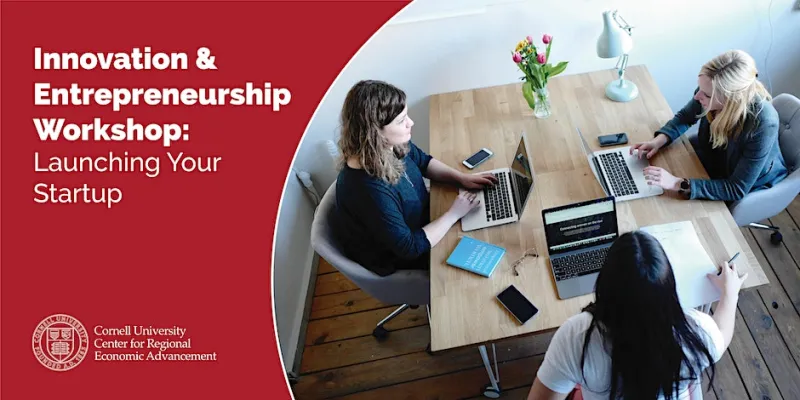
Photo: entrepreneur maker workshop small business product development, via gradcareers.cornell.edu
There's a moment a lot of makers describe the same way. You're standing behind your booth at a local faire, explaining your project for the hundredth time that weekend, when someone pulls out their wallet and says, "I want to buy one. Actually — can I order ten?" The air shifts. Something clicks. And suddenly, what started as a weekend obsession starts looking a lot like a business.
For a surprising number of American makers, that moment turned into something much bigger than they expected. We're talking warehouses, employees, investors, and revenue numbers with a lot of zeros. These aren't outliers anymore — they're a pattern, and it's worth paying attention to.
The Fair as a Launch Pad, Not Just a Showcase
Maker fairs have always been about showing off cool stuff. But somewhere along the way, they became something else too: a real-world proving ground for product ideas that no focus group or pitch deck could replicate.
When you set up a booth, you get brutally honest feedback in real time. People either pick your thing up or they don't. They ask questions that reveal gaps in your design. They suggest uses you never considered. And occasionally, they hand you money before you've even figured out your pricing.
That kind of market validation is genuinely hard to manufacture any other way. Big tech companies spend millions trying to simulate what a maker gets for the cost of a faire registration fee and a weekend of their time.
Several successful founders have pointed to their early faire appearances as the moment they stopped guessing and started knowing. One hardware startup founder who now runs a smart home device company out of Austin, Texas, traces the pivot directly to a regional maker event where he sold out of prototypes in three hours. "I came home Sunday night and just stared at my workbench," he said in a recent podcast interview. "I realized I'd been treating this like a hobby when the market was telling me it was a product."
The Messy Middle: Scaling Without Losing Your Soul
Here's the part the success stories tend to gloss over: the stretch between "people want this" and "we can actually make and sell this sustainably" is brutal.
Most makers aren't trained in supply chain logistics, employment law, or unit economics. They know how to build things. Translating that skill into a repeatable manufacturing process — while maintaining quality, managing cash flow, and hiring people who share your vision — is a completely different discipline.
A common pain point is what makers sometimes call the "batch trap." You hand-make a hundred units, sell them, and now you have orders for five hundred. Suddenly you're not a maker anymore; you're a production manager. The craft that made your product special is getting squeezed out by the demands of scale.
Some founders solve this by partnering with domestic contract manufacturers, keeping the design and quality control in-house while outsourcing the physical production. Others bring in a business co-founder specifically to handle the operational side, freeing the original maker to stay in the creative lane. Neither solution is perfect, but both are better than trying to do everything yourself until you burn out.
The ones who navigate this transition most successfully tend to have one thing in common: they stayed connected to the maker community even after they didn't need to anymore.
Community as a Competitive Advantage
This is something that doesn't show up on balance sheets but probably should. The maker community has an unusually generous culture around sharing knowledge, making introductions, and cheering for each other's wins. That culture doesn't disappear when someone starts a company — if anything, it intensifies.
Founders who grew up in the faire ecosystem often find that their network is one of their most valuable assets. Need a referral to a reliable PCB manufacturer? There's a maker in your Discord who knows someone. Trying to figure out how to handle a patent question on a shoestring budget? Someone in your local makerspace has been through it. Looking for beta testers who will actually give you useful feedback instead of just being polite? Your faire community is right there.
Beyond the practical benefits, there's a psychological dimension that's hard to overstate. Entrepreneurship is lonely. The early years especially can feel like you're screaming into a void while everyone around you has a "real job" and a predictable paycheck. Having a community of people who understand why you'd rather debug a circuit board at midnight than watch Netflix — that matters more than most founders will admit publicly.
Some maker-turned-founders actively give back by returning to fairs as mentors, hosting workshops on topics like pricing strategy or crowdfunding, or sponsoring booth fees for newer makers who can't afford the entry costs. It's a virtuous cycle that keeps the whole ecosystem healthier.
What the Numbers Are Starting to Show
The maker-to-founder pipeline is real enough now that investors are starting to pay attention. Hardware accelerators like Highway1 (now part of Bolt) have specifically sought out makers with faire backgrounds, recognizing that someone who's already sold physical products to real humans has a leg up on a team that's only ever made decks.
Crowdfunding platforms like Kickstarter and Indiegogo have long been a natural next step for makers coming out of the faire world — the community-building skills translate directly, and the audience is primed to back scrappy, creative projects. Several products that debuted at regional maker fairs have gone on to raise seven figures on Kickstarter within weeks of launching campaigns.
Retail is another pathway that's opened up in unexpected ways. Boutique hardware stores, museum gift shops, and specialty retailers have become increasingly interested in stocking maker-originated products, particularly in categories like educational toys, DIY kits, and smart home gadgets. These aren't the margins of a Home Depot endcap — they're curated placements that tell a story, and that story often starts with a faire booth.
The Lesson Hiding in Plain Sight
If you're a maker with a project that people keep asking about, the message from everyone who's made this leap is pretty consistent: take it seriously before someone else does. Document your process. Track your costs. Talk to people who've scaled physical products before. And for the love of all things soldered, protect your intellectual property early — that's a mistake you can't undo later.
But also — don't rush to abandon what made your thing special in the first place. The makers who build companies that last tend to be the ones who never stopped thinking like makers, even when the spreadsheets started multiplying.
The faire booth isn't the end of the story. For a lot of people, it's just page one.