Old Hands, New Tools: What Happens When Craftspeople and Coders Share the Same Workshop
Somewhere at a maker fair in the midwest last summer, a sixty-three-year-old machinist and a twenty-four-year-old product design student spent forty-five minutes arguing about whether a part was better made on a lathe or printed on an FDM printer. Neither convinced the other. Both walked away with better questions than they'd arrived with.
That kind of friction — productive, occasionally uncomfortable, ultimately useful — is happening in workshops and at fair tables all over the country. The maker community has always been multigenerational in theory. In practice, the generations don't always mix as smoothly as the community's inclusive reputation might suggest.
The tensions are real. So are the opportunities. Understanding both is worth some time.
What "Real Making" Actually Means to Different Generations
The disagreements tend to cluster around a few recurring themes, and the most loaded one is legitimacy. What counts as real making?
For many older craftspeople — people who came up through trades, through shop class, through decades of hands-on practice — making means physical mastery. It means knowing how materials behave, understanding tolerances, developing the kind of judgment that only comes from years of getting things wrong in instructive ways. From that perspective, a twenty-year-old who designs a part in CAD software and sends it to a printer hasn't really made anything. They've specified something.
For younger makers, that framing can feel like gatekeeping dressed up as standards. In their view, the tools have changed — dramatically and permanently — and insisting on traditional methods as the benchmark for legitimacy is a bit like insisting that a photograph isn't real art because it doesn't involve a paintbrush. The skill set has evolved. The creativity hasn't gone anywhere.
Both positions have merit. Neither is entirely right.
The Technology Gap Is Real, But It Goes Both Ways
It's tempting to frame the generational divide as older makers being resistant to technology and younger ones being fluent in it. That's partially true and mostly incomplete.
Younger makers are, broadly speaking, more comfortable with software tools — CAD, parametric design, microcontroller programming, digital fabrication. They've grown up with these tools and treat them as natural extensions of the creative process. But many of them have significant gaps in foundational knowledge: material science, mechanical engineering principles, the kind of intuitive understanding of how physical things fail that only comes from building enough of them by hand.
Older makers often have the opposite profile. Deep material knowledge, strong mental models for how things work in the physical world, decades of problem-solving experience — but sometimes a real resistance to digital tools that could dramatically expand what they're able to create, or make their work accessible to a broader audience.
The most capable makers at any fair tend to be the ones who've bridged that gap in one direction or another. The machinist who learned enough CAD to design his own fixtures. The product designer who spent a summer learning to weld. Cross-pollination produces better work. It also makes for more interesting conversations.
Sustainability, Ethics, and What the Younger Generation Is Asking
There's another layer to this that goes beyond technical skills. Younger makers tend to bring a different set of concerns to their work — questions about material sourcing, environmental impact, repairability, and the ethics of what gets built and for whom.
For some older craftspeople, these concerns can feel like moralizing — an imposition of politics onto what should be a purely technical endeavor. For younger makers, they're simply part of thinking seriously about what you're making and why.
This particular tension shows up in interesting ways at fairs. A booth showcasing a gorgeous hand-built wooden desk might draw admiration from older visitors and pointed questions from younger ones about where the wood came from and whether it was sustainably sourced. A booth featuring a new consumer gadget might get enthusiasm from tech-oriented younger attendees and skepticism from older visitors who want to know if it can be repaired when it breaks.
Neither set of questions is wrong. And the makers who engage with both — who can talk about craft and sustainability, about innovation and repairability — tend to attract the most interesting conversations at their tables.
The Spaces That Are Getting It Right
Across the country, a handful of makerspaces and fair organizers have made deliberate choices to bridge this divide, and the results are worth paying attention to.
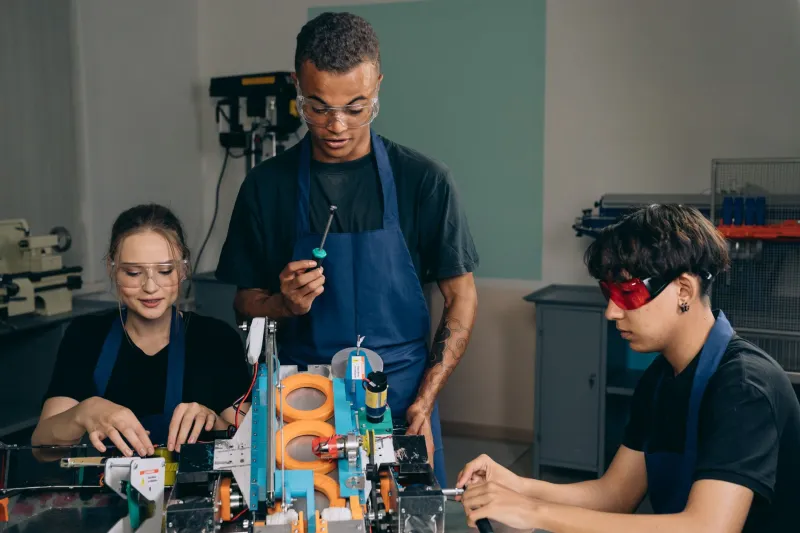
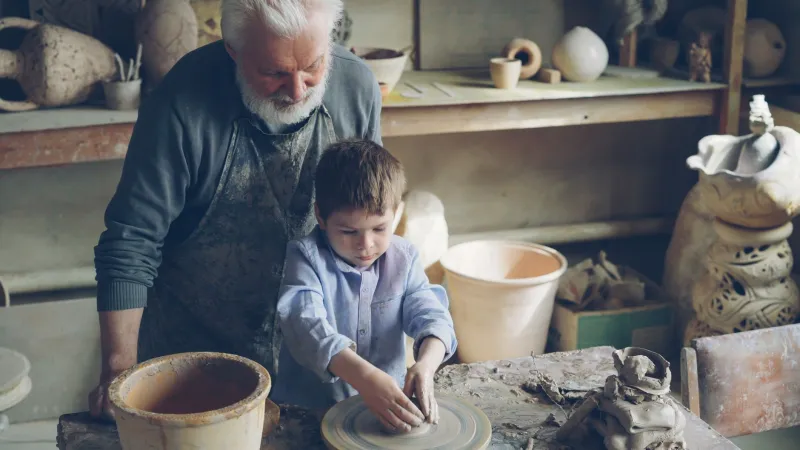
Some have structured programming around intergenerational project pairs — matching an older craftsperson with a younger designer to collaborate on a single build. The parameters are simple: the older maker teaches one hands-on skill, the younger maker introduces one digital tool. What comes out of these collaborations is often surprising to both participants.
Others have created programming tracks that explicitly honor traditional craft alongside digital fabrication — not as competing approaches but as complementary ones. A fair that gives equal floor space and equal promotional weight to a hand-tool woodworker and a digital fabrication lab is making a statement about what making includes.
The organizers who've thought hardest about this tend to say the same thing: the goal isn't to make everyone agree about what real making looks like. It's to create enough genuine contact between people with different approaches that they start to see what the other person is actually doing — and why it's harder than it looks.
What Each Generation Owes the Other
The generational tension in maker culture isn't unique to this community. It shows up in workplaces, in educational institutions, in families. What makes it interesting in the maker context is that the stakes are relatively low and the shared commitment to building things creates a natural common ground.
Older makers have accumulated knowledge that isn't written down anywhere — intuitions about materials, failure modes, workarounds for problems that haven't been Googled because they predate the internet. That knowledge is genuinely at risk of disappearing if it isn't transmitted.
Younger makers bring tools, approaches, and questions that can make that accumulated knowledge more powerful and more relevant. They can also challenge assumptions that have calcified into dogma — the idea that there's only one right way to do something, or that new methods are inherently inferior to established ones.
The best version of maker culture holds both of these things at once. It respects depth of experience without treating it as the only valid credential. It embraces new tools without losing the thread of what it means to understand a material with your hands.
That balance is hard to strike. But it's exactly the kind of problem that makers — of all generations — are supposed to be good at solving.